How to Survive a Long Solo Rust Wipe Like an Apex Survivor
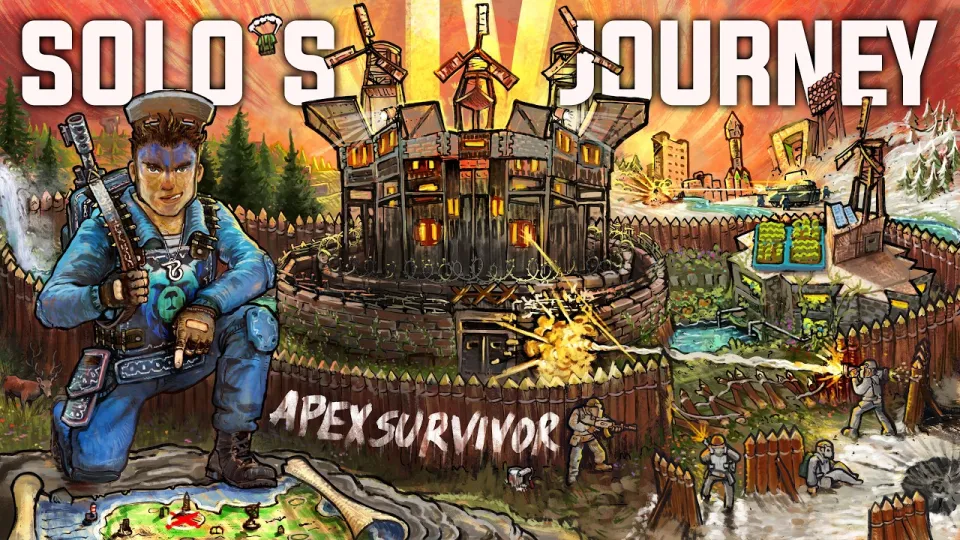
Video: Rust - A Solo's Journey IV: Apex Survivor (Movie)
Want articles like this for your own video to promote it on YouTube and Google? Order them through the Telegram bot @sat_sit_bot. The bot writes and publishes the articles itself (with your YouTube video embedded) on popular topical websites (no ads). Your first 50 articles are free.
Key takeaways
- Blooprint survived 14 days solo on one Rust server and turned it into a nearly five-hour movie with 12 chapters plus an epilogue.
- The run was documented with a dedicated progress tracker at solosjourneytracker.com, where viewers could enter a timestamp and see the exact state of the wipe.
- The channel hit 2.5 million subscribers with this release, and the video pulled millions of views despite a runtime close to 4 hours 50 minutes.
- Solo survival on a long wipe depends on base design, a stable farming loop, monument control and knowing when to fight and when to hide.
- Rust rewards information and patience more than raw aim: scouting, map awareness and timing decide most solo outcomes.
Surviving a long solo Rust wipe means treating the server as a marathon rather than a sprint: secure a discreet base early, build a repeatable farming and crafting loop, control a monument or two, and only take fights you can win or escape. Blooprint's 14-day solo run, documented with a public progress tracker at solosjourneytracker.com, shows the same pattern — small decisions compounding over days until a solo player is raiding, defending and taking revenge on equal terms with groups.
What a 14-day solo Rust run actually demands
A solo wipe is a test of routine, not reflexes. Blooprint's project covered 14 in-game days on a single server and was edited into a 12-chapter movie with an epilogue, which is a useful map of how a long run really unfolds: quiet opening, mid-wipe expansion, raids, setbacks and a final arc. The core demands are consistent:
- A base that does not advertise you. Small footprint, cheap upkeep, no sky-high towers visible from the road.
- A farming loop you can repeat half-asleep. One route, one set of monuments, one recycling point.
- Component discipline. Sulfur, metal fragments and scrap are budgeted, not spent on impulse.
- Time management. Long wipes are won in the hours when the server is quiet.
- Patience with people. Most solo deaths come from ego, not from better-equipped opponents.
Base design and placement for a solo survivor
Base placement decides more of a solo wipe than any gunfight. The right spot balances low traffic, proximity to a monument you can farm, and a short run to a safe recycling point. A compact triangle or honeycomb core with a single obvious loot room is standard practice, because raiders who break in and find cheap loot rarely come back for a second pass.
Practical rules that hold up over a two-week wipe:
- Build away from the main roads and from large clan compounds, but close enough to a Tier 1 or Tier 2 monument to farm it on foot.
- Keep a small starter base and a separate, better-hidden stash for sulfur and explosives.
- Use multiple small bases rather than one fortress; losing one should never end the wipe.
- Upgrade doors and cores before expanding rooms — a solo player's budget is always tighter than a group's.
- Stockpile wood and stone for upkeep before you stockpile weapons.
Farming, monuments and the economy of a solo player
Solo Rust economy is about converting time into scrap efficiently. Monuments such as the Oil Rig and Cargo Ship are high-value but loud; a solo player who contests them needs an escape plan and a boat staged nearby. Quieter routes — road runs, mining outposts, small monuments — produce fewer fireworks and far fewer deaths.
A workable daily loop looks like this:
- Farm the safe route at low-population hours and bank components in the stash.
- Spend scrap on blueprints that unlock the next tier of gear, not on cosmetics or sidegrades.
- Recycle only what you cannot use, and never carry a full inventory of loot into a fight.
- Keep a reserve of sulfur that never gets touched unless a raid is planned.
- Replace gear you lose immediately so a bad death does not stall the next session.
PvP, raids and revenge without a team
Solo PvP is a discipline of choosing fights. Groups win by numbers; solos win by positioning, timing and third-partying fights that are already in progress. The same logic applies to raiding: a solo raid should be short, cheap and aimed at a base whose owner is offline and whose loot is worth the explosives.
Key habits:
- Scout a target for a full day before spending sulfur on it.
- Raid during quiet hours and stage an escape route before the first explosive goes down.
- Expect counter-raids; keep a second base with spare kits.
- Revenge is a planning exercise, not an emotional one — track who raided you and hit them when they are weakest.
- Never fight a group on open ground with no cover and no fallback.
What viewers actually ask about long solo wipes
The most common doubts around marathon solo content are about time, motivation and fairness. A near five-hour runtime sounds unwatchable until you realise it is structured as chapters, which is exactly how a long wipe should be approached: in sessions with clear goals. The other recurring theme is the gap between solo and group play — a solo player will lose gear, bases and fights, and the run only continues because the next session starts from a stash, not from zero.
A few honest expectations to set:
- A 14-day run is not 14 days of constant action; most of it is farming, crafting and waiting.
- Losing a base mid-wipe is normal and survivable if you kept a backup.
- Skill matters less than consistency: players who log in every day outperform players who play one long session.
- Community reactions to solo movies often focus on resilience, because that is the actual skill being demonstrated.
Useful links
- Progress tracker for the solo run: https://solosjourneytracker.com
- Blooprint vinyl figure: https://youtooz.com/products/blooprint
- Solo's Journey mousepads and playmats: https://epicdesk.shop/collections/blooprint
- Animated intro studio: https://x.com/highresolution0
- Thumbnail artist: https://twitter.com/veys_el_kara
Final thoughts on surviving solo in Rust
A long solo Rust wipe is won by routine, not by highlight-reel plays: a hidden base, a repeatable farm, a sulfur reserve and the discipline to walk away from bad fights. Blooprint's "A Solo's Journey IV: Apex Survivor" is a useful case study because it shows the whole arc — the quiet farming, the raids, the losses and the revenge — across 14 days and 12 chapters, and the channel's approach to documenting a wipe step by step is what makes it worth studying. If you want to follow the run in detail, the chapter-by-chapter progress tracker is the place to start: check the Solo's Journey tracker. The rest is patience, a small base and one more farming run.
Source: Rust - A Solo's Journey IV: Apex Survivor (Movie) · Markdown version
Questions & answers
How long does it take to survive a full solo Rust wipe?
A standard wipe runs weekly or biweekly, so a full solo run means staying relevant for one to two weeks of real time. Practically, that is a few hours a day of farming, crafting and defending rather than nonstop play. Consistency across sessions matters far more than one long grind.
Is it possible to raid as a solo player in Rust?
Yes, but the economics are tight: pick small, offline targets, scout them first and spend sulfur only when the expected loot beats the cost. Keep a backup base with spare kits so a failed or countered raid does not end your wipe. Most successful solo raids are short and cheap.
What is the best base for a solo player on a long wipe?
A compact base with a small footprint, a single well-defended loot core and low upkeep is the standard choice. Many solos run several small bases instead of one large one, so losing a base costs progress rather than the entire wipe. Placement away from roads and clan compounds matters as much as the design.
Why do solo Rust movies get so long?
A long runtime reflects the actual structure of a wipe: farming phases, monument runs, raids and downtime all take time. Chaptered edits let viewers watch in parts and skip to the moments they care about. The length is a feature of the format, not padding.